

Did you know that 60% of businesses experience disruptive risks every year? From supply chain breakdowns to cyber threats and financial turbulence, business risk is a daily reality. The good news: risk isn’t just a hurdle—it’s an incredible teacher. Smart leaders use risk insights to protect their business and fuel growth. In this guide, discover proven strategies, actionable steps, and real-world examples to help you turn potential threats into opportunities for resilience and success.

Understanding Business Risk: Why It Matters for Every Company
Startling statistic: 60% of businesses experience disruptive risks annually.
Business risk is more than a threat—it's an opportunity for growth and strategic adaptation.
Investors and leaders value evidence-based risk management strategies.
"Risk is not just an obstacle—it's the engine of innovation when managed wisely."
In business, risk is everywhere. Whether stemming from unpredictable market shifts or operational surprises, risks can have a significant impact on business operations, revenue, and reputation. Yet, they’re not merely threats to avoid. When addressed properly, business risks pave the way for innovation, allowing an organization to adapt, evolve, and thrive in uncertain times. Risk management is crucial not only for protecting your business but also for attracting investors who appreciate companies with well-developed evidence-based strategies. Recognizing, evaluating, and managing types of risk—from finance to reputation—helps leaders build robust frameworks that sustain long-term success.
What You'll Learn About Business Risk
The essentials of business risk and its impact.
Different types of business risk you need to recognize.
Effective risk management strategies to safeguard your organization.
Real-world examples and expert approaches to business risk.

Business Risk Defined: Key Concepts Every Leader Should Know
What is Business Risk?
Business risk refers to the possibility that unforeseen events or circumstances could negatively impact your company’s objectives, financial health, or reputation. This encompasses everything from macroeconomic changes and technological disruption to human error and cyber threats. Every business faces some degree of potential risk, whether it’s a startup or a global enterprise. What sets high-performing organizations apart is how they anticipate and handle these challenges. They implement proactive risk management processes to protect assets, ensure business continuity, and strengthen their competitive edge. Ultimately, understanding business risks is about seeing the “potential impact” not just as a threat, but as an essential indicator for where safeguards and innovation should be prioritized.
The scope of business risk is broad. It extends from internal factors—like operational inefficiencies and cash flow problems—to external threats, including regulatory changes and market volatility. By defining and identifying various types of risks, leaders can respond dynamically, using strategic risk assessment and management strategies tailored to their unique situation. In the sections below, we’ll break down each type of risk, showing why comprehensive risk assessment is critical to every leader’s playbook.
Types of Business Risk and Their Implications
Not all risks are created equal. The most common types of business risk include:
Financial risk: Concerns over cash flow, investment losses, or market instability.
Strategic risk: The danger of making ill-timed or poorly planned business moves in a volatile environment.
Reputational risk: The threat of losing public trust or attracting negative attention—sometimes from a single incident.
Operational risk: Disruptions from production flaws, human error, supply chain issues, or process failures.
Security risk: Exposure to data breaches, cyber attacks, and physical security breaches.
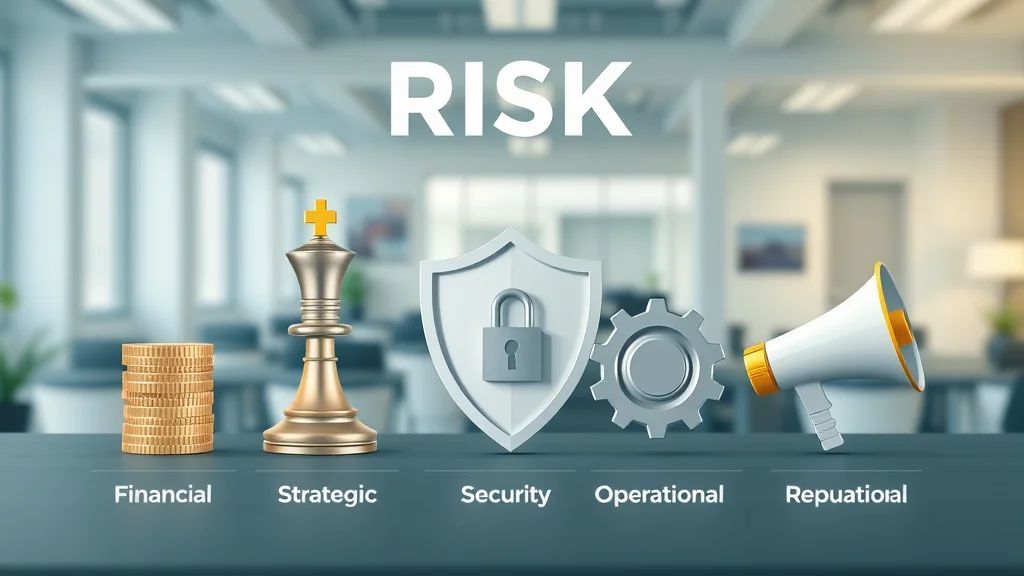
The 4 Main Types of Business Risk Explained
Financial Risk: Managing Monetary Challenges
Financial risk can manifest in various ways: volatile cash flow, unpaid invoices, investment downturns, or abrupt cost spikes. Maintaining a healthy financial foundation is crucial, as this type of risk can quickly undermine business operations and long-term sustainability. Effective risk management strategies include rigorous budgeting, diversifying income sources, and maintaining reserves for emergencies. For example, leveraging insurance or hedging investments can reduce exposure to catastrophic losses.
Especially during economic downturns, the ability to mitigate financial risks defines whether a business merely survives or continues to grow. Leaders who make data-driven financial decisions (such as monitoring key performance metrics and using predictive analytics) are better poised for success. Recognizing potential risk factors—such as over-leveraging, fluctuating interest rates, and sudden drops in demand—and integrating them into the risk management process protects your business’s bottom line.
Strategic Risk: Navigating Uncertain Futures
Strategic risk emerges when business objectives, expansion plans, or new products fail to meet market needs or adapt to changing industry landscapes. This type of risk often stems from decision-making that overlooks competitive threats, emerging technologies, or shifting consumer preferences. Companies that don’t monitor strategic risks may invest heavily in outdated services or miss vital market changes—ultimately causing financial loss or missed opportunities.
To manage strategic risks, companies need to consistently gather external market intelligence, explore “what-if” scenarios, and review their business models. Regular strategy sessions, combined with cross-departmental brainstorming, help businesses stay nimble. A robust risk management strategy is proactive: anticipate the forces that shape your industry, avoid information silos, and root every decision in evidence, not hope.

Operational Risk: Ensuring Business Continuity
Operational risk refers to the potential failures in day-to-day business activities due to inefficient processes, human error, or breakdowns across the supply chain. Even small hiccups can cause wide-ranging disruptions: think technology outages, natural disasters, or a single misplaced shipment derailing your operational flow. Operational risk also encompasses compliance failures, workplace safety incidents, and disruptions caused by external dependencies.
Mitigating operational risks involves mapping out mission-critical processes, investing in staff training, and conducting regular audits to spot weaknesses early. Use scenario planning and redundancy strategies—like backup systems and alternative suppliers—to build business continuity into your operations. Smart leaders recognize that regular reviews and embracing continuous improvement keep them ahead of evolving operational threats.
Reputational Risk and Security Risk: Protecting Your Brand
Reputational risk is the risk of negative public perception, often triggered by product failures, negative press, customer complaints, or unethical conduct. As news spreads rapidly in today’s digital age, even isolated incidents can turn into significant potential threats to brand value and consumer trust. To minimize reputational risk, focus on quality control, transparent communications, and robust customer service policies.
Security risk concerns both cyber and physical threats. With the rise in cyber attacks and data breaches, businesses need to prioritize IT security measures—regularly updating credentials, using firewalls, and running ongoing vulnerability assessments. Physical asset protection (like secure access points and surveillance) is equally vital. Proactive security planning ensures the integrity of confidential data and smooth daily operations, enabling leaders to focus on growth.
Comparison of Types of Business Risk, Key Characteristics, and Example Mitigation Strategies |
||
Type of Business Risk |
Key Characteristics |
Example Mitigation Strategies |
|---|---|---|
Financial Risk |
Cash flow volatility, investment losses, dependency on single revenue sources |
Maintain reserves, diversify income, rigorous budgeting, insurance policies |
Strategic Risk |
Poor decisions, lack of market fit, slow response to changes |
Scenario planning, competitor analysis, regular strategy review |
Operational Risk |
Process failures, human error, supply chain disruptions, regulatory issues |
Staff training, process audits, backup systems, compliance programs |
Reputational & Security Risk |
Negative publicity, data breaches, theft, loss of trust |
Strong PR, customer service, security protocols, crisis management plans |
Business Risk in Practice: Real-World Examples
Case Study: Supply Chain Disruption and Market Volatility

During the global pandemic, countless businesses experienced firsthand the financial and operational impact of supply chain disruption. From automotive manufacturing delays to empty retail shelves, a single break in logistics created cascading effects. Market volatility intensified the pain, as consumer behavior shifted rapidly and suppliers struggled to adapt. Companies without flexible sourcing, inventory buffers, or digital monitoring suffered extensive losses. This real-world example highlights how integrating risk management strategies—such as diversifying suppliers, building inventory resilience, and leveraging real-time analytics—can make a critical difference in weathering storms.
The lesson? Proactive risk mitigation doesn’t just protect your business in crisis; it creates a foundation for informed decision-making and faster recovery. Companies that emerged stronger paired scenario-based contingency planning with evidence-based investments, underscoring the essential nature of continuous risk assessment.
Lessons from Industry Leaders on Managing Business Risks
"Clinging to outdated strategies is handing the keys to failure."
Leading companies like Amazon, Toyota, and Johnson & Johnson have mastered adaptive risk management. They conduct frequent scenario planning, invest in flexible technology, and embed risk awareness at every level of the organization. For example, Amazon’s dynamic inventory and supplier relationship models allow it to quickly shift logistics routes or product sourcing when disruptions arise. Johnson & Johnson’s proactive approach to regulatory challenges helped them remain resilient during global health crises, with business continuity plans ensuring minimal service interruption.
The key takeaway from the most resilient businesses: don’t wait for trouble. Build a culture of risk anticipation and continuous improvement. Treat every potential risk as a chance to sharpen your processes and reinforce your company’s strategic direction.
Proven Risk Management Strategies for Business Risk Minimization
Developing a Risk Management Process

An effective risk management process starts with clearly mapping out your business’s activities, goals, and vulnerabilities. Gather a cross-functional team to brainstorm potential risk scenarios, evaluate their likelihood and impact, and prioritize the risks that matter most. Next, assign owners to each key risk and develop early warning systems and response plans. Regularly testing these plans through tabletop exercises or scenario simulations ensures that the team is prepared and aware of their responsibilities.
The best approaches are iterative: revisit your risk management plan quarterly or after major incidents. This ensures that your risk maps reflect the current state of your business risks and are updated for new challenges such as emerging technology, regulatory changes, or shifts in supplier landscapes.
Creating a Risk Management Strategy Tailored to Your Organization
Establish goals and risk tolerance.
Conduct thorough risk identification and assessment.
Implement risk prevention and mitigation measures.
Different companies have unique needs and tolerances for risk. Start by defining your organization’s objectives and clarify how much uncertainty you’re willing to accept to achieve them. Conduct in-depth risk assessments—this can involve SWOT analysis, financial scenario modeling, or business impact analysis. From there, implement a layered risk management strategy: some risks can be avoided, others transferred through insurance, while certain inevitable risks should be reduced through controls or accepted with contingency plans.
Always ensure that mitigation strategies are supported across the organization, from the C-suite to frontline employees. Regular training, transparent communications, and visible commitment from leadership build a culture where risk management is everyone’s responsibility.
Step-by-Step Risk Management Process and Best Practices |
|
Step |
Best Practices |
|---|---|
Identify Risks |
Engage stakeholders, brainstorm scenarios, consult historical data |
Assess & Prioritize |
Rate likelihood and impact, focus on high-priority risks |
Develop Response Plans |
Create clear action plans, assign owners, set triggers for action |
Implement Controls |
Deploy preventive measures, test backup systems, maintain documentation |
Monitor & Review |
Conduct regular reviews, update risk maps, adjust policies as needed |
Risk Management Strategy: Evidence-Based Decision-Making

Role of Data in Business Risk Assessment
Today, risk management hinges on actionable data. Data analytics tools gather and process market trends, financial indicators, and operational metrics to provide real-time risk assessments. By tracking leading indicators—like changes in sales velocity or customer sentiment—businesses can flag issues before they spiral. Modern organizations rely on dashboards that visualize potential risk hot spots, allowing fast, evidence-based decision-making.
Data-centric approaches also make it easier to quantify the potential impact of various scenarios, run stress tests, and prioritize mitigation. Leaders who champion the use of analytics are better prepared to justify decisions to investors, adapt strategies swiftly, and continuously improve their risk posture.
Tools & Software for Business Risk Evaluation
There is an expanding ecosystem of risk management software designed to help businesses identify, assess, and mitigate business risk. Solutions range from enterprise risk management (ERM) platforms to modular tools for monitoring supply chain risk, financial risk, or cybersecurity threats. Key features include automated alerts, customizable dashboards, document management, and collaboration tools.
Popular choices include Resolver, LogicGate, and RiskWatch. Selecting the right platform depends on your business’s specific needs and industry regulations. Implementing the right risk evaluation software streamlines reporting, encourages organization-wide participation, and supports timely, systematic mitigation of potential risks.
Watch this animated explainer to see each stage of the business risk management process in action—from identification through mitigation to ongoing monitoring.
Developing a Resilient Organization: Adapting to Evolving Business Risks
Promote a risk-aware culture.
Leverage scenario planning.
Continually review and update risk strategies.

Building resilience is an ongoing journey. Encourage transparency and open dialogue about risk at every level of your organization. Use scenario planning to anticipate the consequences of unlikely but high-impact events, and update your risk management plan as new risks emerge. Empower teams by providing resources and training to recognize risks early. Reviewing strategies quarterly ensures adaptation to changing environments, regulatory shifts, and emerging threats, keeping your business robust against the unknown.
Ultimately, fostering a risk-aware culture means that risk management is not a one-off initiative—it’s baked into the DNA of your business operations and strategic planning, protecting your business now and into the future.
People Also Ask: Essential Business Risk FAQs
What are the 4 main types of business risk?
The 4 main types of business risk are financial risk, strategic risk, operational risk, and reputational risk. Each can impact a company’s capability to achieve objectives and must be managed with specialized strategies.
What is meant by business risk?
Business risk refers to the potential for events or conditions to negatively impact a company’s ability to achieve its goals. These risks can stem from internal factors, such as operational inefficiencies, or external forces like economic shifts.
What are examples of business risk?
Examples of business risk include supply chain disruptions, regulatory changes, data breaches, and shifts in consumer demand. Effective risk management anticipates and addresses these challenges.
What are the 5 types of risk?
The five types of risk typically refer to financial, strategic, operational, reputational, and security risks—all of which can affect a business, requiring targeted mitigation measures.
Frequently Asked Questions About Business Risk and Risk Management
How often should companies reassess their business risk management strategies?
Companies should reassess their risk management strategies at least quarterly, or whenever a significant change occurs in the internal or external business environment. Regular reviews ensure emerging risks are identified early and strategies remain effective.
How is business risk different from financial risk?
Business risk encompasses all potential threats to a company’s objectives, including operational, reputational, or strategic threats, while financial risk specifically relates to a company’s ability to manage its finances, cash flow, and exposure to financial loss.
What role does leadership play in minimizing business risk?
Leadership sets the tone for risk culture—driving risk awareness, enforcing policies, and ensuring the allocation of resources to identify, assess, and address business risks proactively. Strong leaders cultivate adaptation and resilience.
Key Takeaways: Effective Business Risk Management Essentials
Identify and understand the full spectrum of business risks.
Leverage evidence-based strategies and risk management tools.
Review and adapt your risk management processes frequently.

Conclusion: Turning Business Risk Into an Asset
Approaching business risk with a proactive, evidence-based strategy empowers organizations to adapt, grow, and turn potential threats into substantial opportunities. Take control—let risk become the engine of your business innovation.


Write A Comment